The annual molt is a critical period for penguins, particularly those inhabiting the harsh polar regions. During this time, known as the "catastrophic molt," these flightless birds undergo a complete shedding and regrowth of their feathers, leaving them temporarily vulnerable. What makes this process even more extraordinary is the fact that many penguin species must endure weeks without food while stranded on land. This biological marvel raises fascinating questions about adaptation, survival, and the incredible resilience of polar wildlife.
The Physiology of Penguin Molting
Unlike most birds that replace feathers gradually, penguins experience a rapid, synchronized molt that leaves them temporarily flightless—though for these aquatic birds, the more significant impact is being temporarily waterless. Their dense, overlapping feathers provide waterproofing and insulation against frigid waters. When these feathers degrade, penguins must replace them all at once because partial molting would compromise their ability to regulate body temperature in freezing environments.
The process begins when new feathers grow beneath the old ones, pushing them out. For 2-4 weeks, penguins resemble ragged balls of fluff as patches of old and new plumage coexist. During this phase, their metabolic rate increases by up to 50% to support feather regeneration while simultaneously maintaining core body heat—a tremendous energy demand that explains why many species cannot risk entering cold waters without full waterproofing.
The Great Fast: Survival Without Sustenance
Emperor and king penguins face the most extreme challenges, fasting for up to 34 days during molting. Their strategy involves dramatic pre-molt weight gain—emperor penguins may increase body mass by 40-50%. Adélie and chinstrap penguins typically fast for 2-3 weeks, while gentoo penguins, with shorter molting periods, may forage intermittently. This variation reflects evolutionary adaptations to different Antarctic and subantarctic environments.
Physiologically, penguins switch to fat-burning mode, utilizing blubber reserves accumulated during months of intensive feeding. Their bodies carefully ration protein to preserve muscle mass while allocating sufficient resources for feather synthesis. Recent studies reveal that molting penguins produce specialized proteins that redirect amino acids from other bodily functions toward keratin production for new feathers.
Behavioral Adaptations During Vulnerability
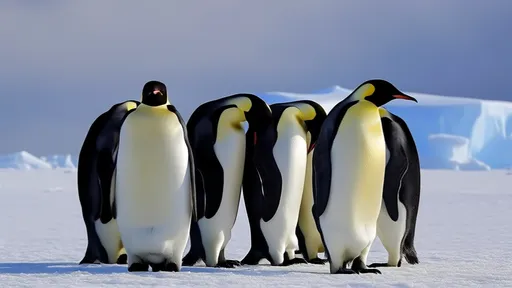
Molting penguins exhibit unique behaviors to maximize survival. They typically gather in sheltered areas called "molting grounds," often different from their breeding colonies. Here, they remain largely immobile to conserve energy, though some species engage in "comfort movements" to dislodge loose feathers. Social clustering provides wind protection and may reduce predation risk, though leopard seals and skuas still target vulnerable individuals.
Temperature regulation becomes precarious during molting. Penguins alternate between spreading their flippers to cool down when overheated by metabolic heat production, and tucking them close to conserve warmth when winds pick up. This delicate balance becomes increasingly difficult as climate change brings more unpredictable weather patterns to polar regions.
Climate Change: Compounding an Already Challenging Process
Researchers have documented concerning trends in recent decades. Warmer temperatures sometimes cause penguins to overheat during molting, while increased precipitation—a consequence of atmospheric warming—can be deadly when water penetrates their incomplete plumage. Perhaps most alarmingly, shifting sea ice patterns and krill populations make pre-molt feeding more difficult, meaning many penguins now begin their fast with insufficient reserves.
A 2023 study tracked emperor penguins that abandoned their molt prematurely due to energy depletion, attempting to return to sea with partially regrown feathers. The outcome was invariably fatal, as compromised waterproofing led to hypothermia. Such observations suggest that what was once a challenging but manageable biological process may become unsustainable for some populations if current climate trajectories continue.
Conservation Implications
The molting period represents a critical bottleneck for penguin populations. Conservationists now recognize that protecting feeding grounds prior to molt is as important as safeguarding breeding colonies. Some proposals include dynamic marine protected areas that shift locations based on satellite tracking of pre-molt penguin movements.
Meanwhile, zoos housing penguins face unique challenges in replicating natural molting conditions. Keepers carefully monitor nutrition in the preceding months and often provide supplemental heat sources during the molt itself, as captive environments cannot perfectly mimic the Antarctic climate that shaped these evolutionary adaptations.
The penguin molt stands as one of nature's most extreme examples of evolutionary adaptation—a biological tightrope walk between renewal and survival. As scientists continue unraveling its mysteries, this annual phenomenon serves as both a wonder of polar ecology and a sobering indicator of how climate change disrupts even the most finely tuned natural processes.

By /Aug 12, 2025

By /Aug 12, 2025
By /Aug 12, 2025

By /Aug 12, 2025
By /Aug 12, 2025
By /Aug 12, 2025
By /Aug 12, 2025

By /Aug 12, 2025
By /Aug 12, 2025
By /Aug 12, 2025
By /Aug 12, 2025
By /Aug 12, 2025
By /Aug 12, 2025
By /Aug 12, 2025
By /Aug 12, 2025
By /Aug 12, 2025
By /Aug 12, 2025
By /Aug 12, 2025
By /Aug 12, 2025
By /Aug 12, 2025
