The koala, an iconic marsupial native to Australia, has long fascinated scientists with its unique ability to survive on a diet of toxic eucalyptus leaves. While these leaves are poisonous to most animals, koalas have evolved a remarkable liver detoxification system that allows them to metabolize the harmful compounds. This biological marvel not only highlights the koala's specialized adaptation but also offers potential insights for human medicine and toxicology research.
Eucalyptus leaves contain a cocktail of toxic phenolic compounds, including terpenes and cyanogenic glycosides, which can be lethal to other herbivores. The leaves are fibrous, low in nutrients, and require significant energy to digest. Yet, koalas have thrived on this unlikely food source for millions of years. Their secret lies in an extraordinarily efficient liver capable of neutralizing these toxins through a complex metabolic process.
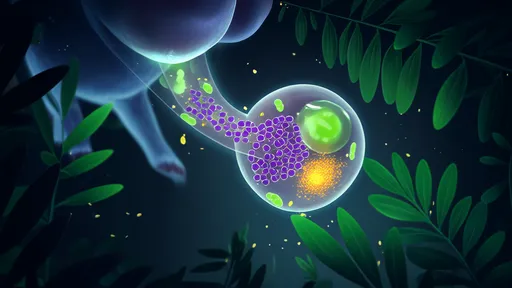
The koala's liver functions like a sophisticated biochemical factory. It produces specialized enzymes that break down the toxic molecules into less harmful byproducts, which are then excreted. Unlike other animals that might avoid or vomit toxic substances, koalas have developed a tolerance that borders on dependency—their entire physiology is fine-tuned to process eucalyptus toxins efficiently.
Researchers have discovered that koala liver cells contain elevated levels of cytochrome P450 enzymes, a family of proteins crucial for detoxification. These enzymes oxidize the toxic compounds, rendering them water-soluble and easier to eliminate. What makes the koala's system particularly fascinating is its ability to handle large quantities of these toxins daily without suffering liver damage—a feat that would overwhelm most mammals.
The evolutionary arms race between koalas and eucalyptus trees has shaped this detoxification prowess. Eucalyptus trees likely developed toxic leaves as a defense mechanism against herbivores, but koalas countered by refining their metabolic pathways over generations. This co-evolutionary dynamic has locked koalas into an exclusive reliance on eucalyptus, as their digestive systems now struggle to process alternative food sources efficiently.
Interestingly, juvenile koalas are not born with this detoxification ability. Instead, they acquire it gradually by consuming small amounts of their mother's pap—a specialized fecal matter rich in microbial flora that primes their digestive systems. This microbial transfer is essential for developing the gut bacteria necessary to break down eucalyptus fibers and the liver enzymes required to neutralize toxins.
Scientists are now studying whether the koala's detoxification mechanisms could inspire new approaches to treating poisoning or metabolic disorders in humans. Understanding how their livers process such high toxin loads without damage might lead to breakthroughs in pharmaceutical research, particularly for liver disease treatments or improved drug metabolism.
However, this extraordinary adaptation comes with vulnerabilities. Because koalas are so specialized, any disruption to their eucalyptus supply—whether from habitat destruction, climate change, or disease—poses an existential threat. Unlike generalist species that can switch diets, koalas have limited alternatives if their primary food source becomes scarce or altered by environmental changes.
Conservation efforts must consider the koala's unique dietary needs. Reforestation projects should prioritize diverse eucalyptus species to ensure year-round availability of suitable leaves. Additionally, researchers are investigating whether koala populations in different regions have developed localized detoxification strategies for their specific eucalyptus varieties, which could be crucial for targeted conservation strategies.
The koala's liver represents one of nature's most exquisite examples of metabolic specialization. Its ability to transform deadly toxins into survivable nutrition demonstrates the incredible plasticity of evolutionary adaptation. As scientists continue unraveling the molecular secrets behind this process, we gain not only a deeper appreciation for this charismatic marsupial but also valuable knowledge about the boundaries of mammalian biochemistry.
Beyond its scientific significance, the koala's story serves as a powerful reminder of nature's interconnectedness. The delicate balance between a specialized herbivore and its toxic food source underscores how vulnerable highly adapted species can be to environmental changes. Protecting the koala means preserving not just an iconic animal, but an entire evolutionary masterpiece of metabolic engineering.
By /Aug 12, 2025

By /Aug 12, 2025
By /Aug 12, 2025
By /Aug 12, 2025
By /Aug 12, 2025
By /Aug 12, 2025
By /Aug 12, 2025
By /Aug 12, 2025
By /Aug 12, 2025
By /Aug 12, 2025
By /Aug 12, 2025

By /Aug 12, 2025

By /Aug 12, 2025
By /Aug 12, 2025
By /Aug 12, 2025
By /Aug 12, 2025
By /Aug 12, 2025
By /Aug 12, 2025
By /Aug 12, 2025
By /Aug 12, 2025
